
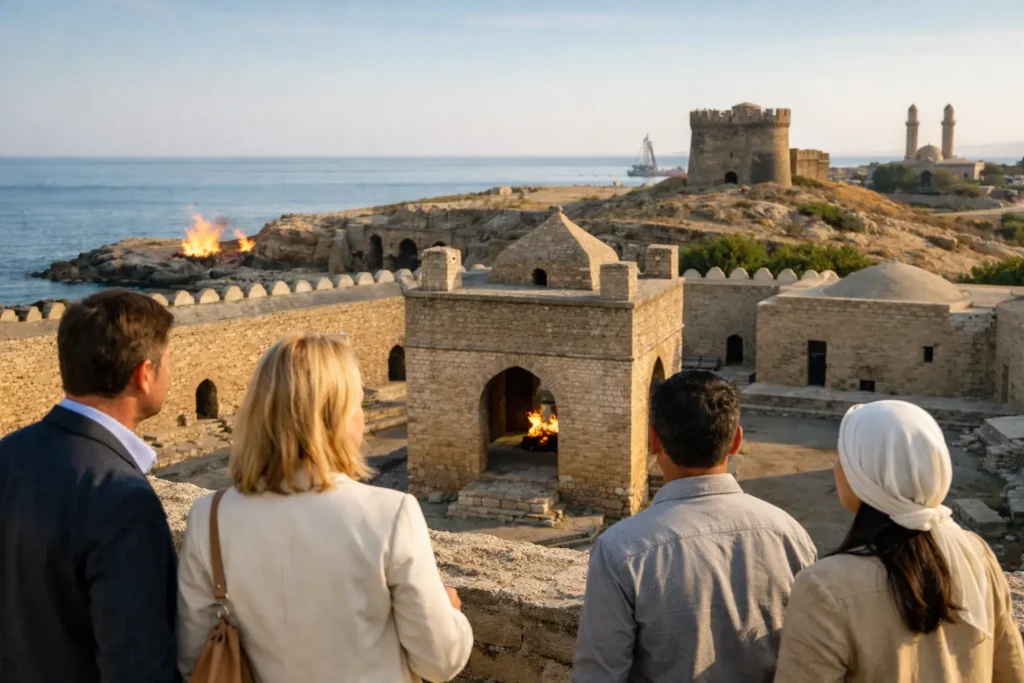
A well-built Absheron Peninsula heritage tour gives Azerbaijan programs a high-value cultural day without the operational complexity of an overnight circuit. Within practical driving range of central Baku, the peninsula brings together fire heritage, fortified settlements, coastal landscapes, and layers of religious and architectural history. For travel agencies and tour operators, it is a versatile product: suitable as a standalone excursion, a Baku extension, a private FIT experience, or a structured component within a group or MICE itinerary.
The distinction lies in execution. Absheron is not a route that benefits from simply adding every landmark to a schedule. Site order, traffic timing, guide language, group pace, meal planning, and the chosen interpretation all determine whether the day feels coherent or rushed. A local DMC should shape the route around the client profile while protecting the operator’s program flow and service standards.
Why an Absheron Peninsula Heritage Tour Sells Well
Absheron provides a strong contrast to Baku’s contemporary skyline and historic Old City. It helps partners present Azerbaijan as a destination with depth, where ancient traditions coexist with a modern capital. The route is especially effective for first-time visitors who have limited time but expect more than a city-only program.
The core appeal is the peninsula’s connection to naturally occurring gas flames and the long cultural history built around them. This is a visual, easily understood story for a wide range of source markets, but it needs professional interpretation. A qualified guide can place each stop in its historical context, explain its architectural details, and adapt commentary to the interests and cultural expectations of the group.
For product managers, the route also offers useful flexibility. A half-day format can focus on two major sites and work around a city itinerary. A full day can include additional heritage stops, a local lunch, and a more relaxed pace. Incentive planners may prefer a private, hosted format with timed entries and a carefully selected dining venue, while leisure series groups often benefit from a consistent, repeatable touring pattern.
The Essential Heritage Stops
Ateshgah Fire Temple
Ateshgah is usually the anchor of an Absheron program. This historic temple complex in Surakhani is associated with the peninsula’s natural gas phenomena and has long been connected with fire worship traditions. Its enclosed courtyard, stone cells, central altar area, and exhibition spaces create a clear narrative setting for guided visits.
For operators, Ateshgah works well early in the day, particularly when a group requires a measured visit with time for interpretation and photography. It is important to allow enough time for guests to understand the site rather than treating it as a brief photo stop. The quality of the guide commentary matters here: the experience is richer when the historical role of the complex is explained with accuracy and cultural sensitivity.
Yanar Dag
Yanar Dag, often called the Burning Mountain, offers the route’s most immediate visual moment. Natural flames rise from a hillside where gas escapes through the ground, creating a distinctive landscape that supports the wider story introduced at Ateshgah.
The site is compact, which makes it useful for group operations, but visit timing still matters. Late afternoon or early evening can be especially effective for atmosphere and photography, depending on the wider itinerary and season. On a full-day program, planners can position Yanar Dag as a concluding heritage stop before returning to Baku for dinner or an evening activity.
Mardakan and the Peninsula’s Fortified Heritage
For clients seeking a deeper historical route, Mardakan can add a different dimension to the program. Its medieval defensive towers and traditional settlement character broaden the story beyond fire heritage. This is a worthwhile inclusion for specialist cultural groups, repeat visitors, or longer Baku stays where the itinerary can accommodate a slower pace.
It does not need to be included in every departure. For short-stay groups, adding too many sites can reduce the impact of the core program. The right choice depends on whether the brief prioritizes headline attractions, architectural heritage, education, or a fuller regional context.
Qala and Living Heritage Context
The Qala area can support a more interpretive, heritage-led itinerary through its archaeological and ethnographic context. It is particularly relevant when an operator wants to position Absheron as more than a fire-themed excursion. Depending on availability, timing, and the group’s interests, it can complement the standard route with a closer look at settlement life and local material culture.
This option is best planned in advance rather than added casually on the day. It requires a clear route design, a guide brief, and realistic timing between visits. For educational groups or premium cultural programs, that additional preparation can create a more differentiated product.
Building the Right Operating Format
A reliable heritage tour starts with a clear client brief. FITs may require private timing, a vehicle matched to party size, and flexibility around meal preferences or hotel departure times. Series groups need disciplined coach movements, guide allocations, entrance coordination, and a route that maintains punctuality across multiple departures. MICE groups often need additional branding, host support, coordinated transfers, and a schedule aligned with conference sessions or gala events.
A practical full-day structure usually begins with a hotel pickup in Baku, followed by Ateshgah and a planned lunch window. Yanar Dag can follow later in the day, with Mardakan or Qala added only where the timing and client profile justify it. The return journey should allow appropriate buffer time for Baku traffic, particularly when guests have evening reservations, airport transfers, or scheduled functions.
For a half-day route, the strongest format is generally Ateshgah and Yanar Dag. This keeps the experience focused and gives partners a dependable excursion that can be paired with Baku Old City touring, a museum program, or a business event agenda. Trying to fit every possible landmark into a half day may look efficient on paper but can weaken the end-client experience.
Ground Handling Details That Protect the Program
Heritage content is only one part of the delivery. The operational standard behind it is what protects an agency’s reputation. Transportation should be allocated according to group size, luggage requirements, accessibility needs, and desired service level. For private and executive programs, vehicle presentation and driver conduct carry particular weight. For larger groups, coach capacity, loading arrangements, guide audibility, and practical rest breaks should be confirmed before arrival.
Guide selection should be treated as a core product decision, not an administrative detail. Multilingual guides need both destination knowledge and the ability to manage group flow across heritage sites. They should know how to keep commentary engaging without delaying the schedule, and how to adjust the level of detail for leisure groups, specialists, educators, or corporate delegates.
Entrance arrangements, restaurant coordination, and contingency planning also deserve attention. A professionally managed itinerary accounts for site operating patterns, group arrival windows, and realistic transfer durations. Where a planned stop becomes less suitable because of timing, the local operations team should be able to recommend a sensible adjustment without compromising the day.
When to Add Gobustan or Keep the Route Focused
Operators sometimes consider combining Absheron with Gobustan and mud volcanoes in one day. It can be possible for selected private programs with an early start and a tightly managed schedule, but it is not always the best product decision. The two routes offer very different heritage stories and sit in different directions from Baku.
For standard group departures, separate excursions usually deliver a better pace and clearer destination narrative. Absheron centers on fire heritage and the Caspian-side cultural landscape, while Gobustan is better positioned as a prehistoric and geological experience. Keeping them separate also creates stronger upsell potential within a multi-night Baku stay, without overloading a single touring day.
For short incentive programs, a combined format may make sense when time is genuinely limited and the guests are comfortable with a longer day. In that case, transportation quality, guide pacing, meal timing, and exact site sequence become even more critical.
A Scalable Azerbaijan Product for Agencies
An Absheron route works because it can be sold in several ways without losing its identity. It can support a three-night Baku package, form part of a six- or seven-night Azerbaijan circuit, or become a cultural component in a MICE agenda. The same core sights can be tailored through vehicle type, guide language, meal format, visit duration, and optional heritage additions.
Brilliant Travel supports this flexibility through local ground handling from arrival to departure, including airport transfers, hotel coordination, transportation, multilingual guide services, and full itinerary execution. For partners, the priority is not simply confirming an excursion. It is receiving a route that fits the brief, is priced responsibly for B2B use, and can be delivered consistently for FITs, groups, and corporate movements.
The most effective Absheron programs leave guests with a clear impression of Azerbaijan’s cultural character while leaving the operator with confidence in the local delivery. A thoughtful route, realistic timing, and a capable on-the-ground team turn a familiar sightseeing day into a dependable product line worth building into the wider destination portfolio.