
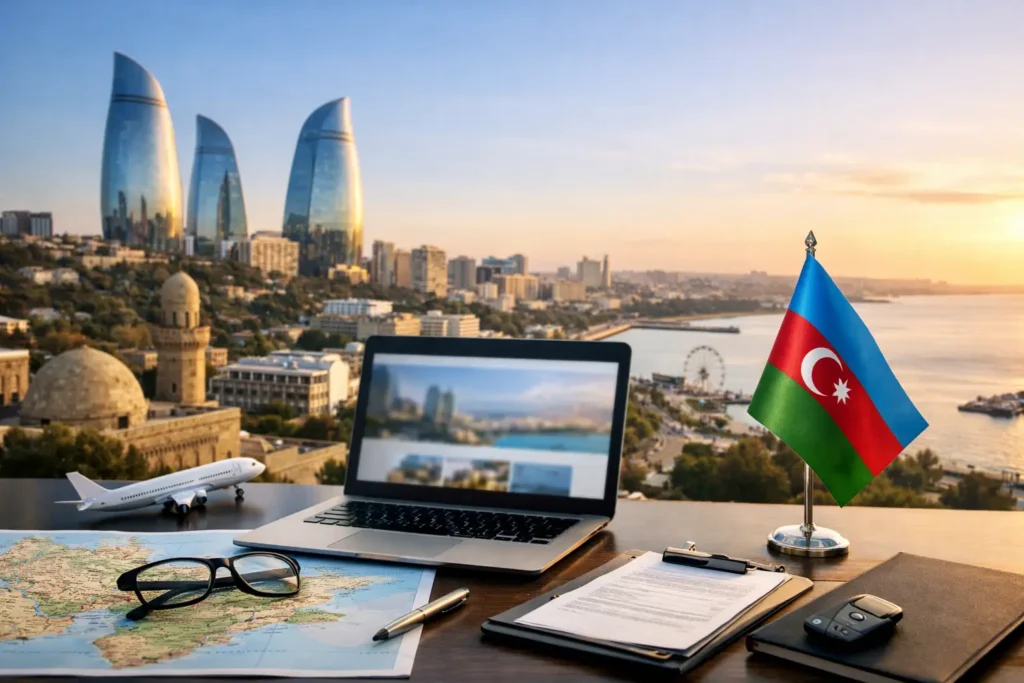
A delayed arrival at GYD, a last-minute rooming-list change, or a gala venue that needs a revised transfer plan can quickly become your client’s problem if the local operator is not in control. An Azerbaijan destination management company should do more than assemble sightseeing services. It should protect your program, your timelines, and the reputation you have built with every traveler, corporate stakeholder, or group leader.
For international agencies, tour operators, OTAs, and MICE planners, Azerbaijan is a flexible product with strong city, heritage, mountain, and nature components. The commercial opportunity is clear, but selling it well depends on dependable local execution. The right DMC provides accurate proposals, contracted hotel options, transport planning, guides, operational follow-up, and one accountable point of contact from arrival through departure.
What an Azerbaijan Destination Management Company Should Deliver
A capable DMC translates a sales brief into an executable ground program. That means assessing the group profile, travel dates, preferred hotel category, language requirements, flight timings, meal arrangements, and the right balance between Baku and regional experiences. It also means identifying details that are often missed in a first proposal, such as realistic transfer timing, restaurant capacity, luggage handling, guide allocation, and suitable pacing for multi-generational or corporate groups.
For FIT business, the priority is usually flexibility. Your travelers may need a private airport transfer, a short Baku stay, a day trip to Gobustan and the Absheron Peninsula, or an extended route through Gabala, Shamakhi, and Sheki. A local partner should be able to build these elements into clear, ready-to-sell modules while adapting the routing to the traveler’s interests and operational requirements.
Group handling requires a different level of coordination. Coach schedules, hotel check-in procedures, guide rotations, set-menu planning, baggage logistics, and optional excursion management all need to be planned before the group arrives. A DMC should not simply confirm suppliers. It should actively manage the movement of the program and keep the agency informed when an adjustment is needed.
MICE and incentive travel place even greater weight on detail. Conference transfers, branded arrival support, venue coordination, technical requirements, VIP protocols, off-site dinners, and team activities must work as one program. A strong local operations team brings practical destination knowledge to the planning stage, rather than trying to solve every issue on-site.
The Value of Local Control in Azerbaijan
Azerbaijan can support programs with very different commercial objectives. Baku offers contemporary architecture, Caspian-facing city experiences, cultural heritage sites, and a well-developed hotel and event infrastructure. The surrounding Absheron Peninsula adds Gobustan, mud volcanoes, Ateshgah, and Yanar Dag to short-stay itineraries without requiring a major change in logistics.
For longer programs, regional circuits create a stronger product story. Gabala and Nohur Lake suit scenic and leisure-led extensions, while Shamakhi and Ismayilli can add cultural and countryside elements between Baku and the northwest. Shahdag and Tufandag provide mountain resort experiences that work especially well for incentives, winter departures, and active itineraries. Guba and Khinalig offer another route for operators seeking a more distinctive northern circuit.
The best routing depends on the arrival pattern, the number of nights, and the traveler profile. A four-night FIT itinerary should not be overbuilt with long road days simply to include every landmark. Equally, a six- or seven-night group program should not remain entirely in Baku when a well-managed regional extension can create a more compelling package. Local expertise matters because it turns destination content into a schedule that guests can actually enjoy.
Fast Quotations Matter, but Accuracy Matters More
For a travel trade partner, response time is often the first test of a DMC relationship. An inquiry may be part of a competitive tender, an urgent client request, or a new seasonal brochure. Delayed answers can cost a sale. Yet a quick quote only has value when the inclusions, conditions, routing, and operational assumptions are clear.
A useful proposal should distinguish between what is confirmed, what is subject to availability, and what can be adjusted. It should explain the service flow in practical terms: airport meet-and-greet arrangements, transfer type, guide language, hotel basis, excursion duration, and group-specific operational notes. This reduces back-and-forth and allows your sales team to present Azerbaijan with confidence.
The quotation process should also be consultative. If a requested itinerary is not the strongest fit for the group, the DMC should recommend a better alternative and explain why. For example, a MICE group may benefit from keeping its primary accommodation in Baku and using the regions for a focused overnight experience, while a leisure series may perform better with a slower multi-city circuit. The goal is not to force a standard package into every request. It is to develop a program that is commercially viable and operationally sound.
How to Assess a B2B Ground Handling Partner
Before committing to a local supplier, look beyond the destination photographs and headline itinerary. Start with communication. Does the team ask the right operational questions? Are replies specific enough for your contracting or sales teams to work with? Can the DMC provide a named account contact who understands your market and remains accountable after the quote is accepted?
Supplier management is equally important. Hotel contracting, seasonal availability, guide quality, transport standards, and restaurant coordination all affect the final guest experience. Competitive net rates matter, but the lowest figure is not always the lowest-risk option. A proposal that looks attractive on paper can create exposure if it depends on vague inclusions, impractical timing, or suppliers without reliable operational support.
Ask how the company handles both FIT and groups. The answer reveals whether it has genuine operating depth or only a limited service model. Agencies that expect regular departures, ad hoc private travel, or MICE requests need a partner with scalable processes. That includes pre-arrival reconfirmations, live operational coordination, clear escalation channels, and post-program feedback.
A dependable DMC also respects the agency relationship. White-label delivery, confidential handling of client information, and consistent service standards allow you to retain control of your customer relationship while relying on local specialists for execution.
Build Programs Around Sellable Experiences
The strongest Azerbaijan product mix usually combines recognizable highlights with enough flexibility for a partner’s own positioning. A city break can center on Baku with a heritage excursion to Gobustan and Absheron. A premium FIT can include private touring, selected dining experiences, and a mountain stay. An incentive itinerary may combine city venues, a carefully managed gala dinner, team activities, and a scenic regional extension.
For touring operators, a regional circuit can connect Baku with Shamakhi, Gabala, Sheki, or Guba, depending on the departure length and desired pace. Extended programs can also include Ganja, Lankaran, Naftalan, or a Caucasus combination through coordinated partner operations in Georgia. The key is to design the route around travel flow, hotel availability, and the group’s actual interests, not around an arbitrary checklist.
Seasonality should influence the proposal without limiting the sales conversation. Mountain resorts can shape winter and active travel programs, while spring and fall are well suited to broader cultural and scenic circuits. Baku remains a practical anchor across much of the year, particularly for city breaks, meetings, and short corporate programs. A local partner should help you match the product to the departure window and client profile.
One Point of Accountability From Arrival to Departure
Ground handling is most visible when plans change. Flight timing adjustments, revised passenger counts, special dietary requests, late additions to a VIP list, or altered event schedules require prompt, coordinated action. The value of an experienced DMC is not that change never occurs. It is that the local team has the supplier relationships and operational discipline to manage it professionally.
This is why dedicated account management matters. Your team should not need to contact separate providers for hotels, coaches, guides, and excursions. A single operational partner should coordinate the moving parts, provide timely updates, and keep decisions clear. That structure is particularly valuable for agencies entering Azerbaijan for the first time or expanding from occasional FIT requests into regular series and group departures.
Brilliant Travel supports partners across Azerbaijan with B2B ground handling built around responsive quotation, tailored routing, multilingual guides, transportation coordination, hotel contracting, and full itinerary execution. The focus is straightforward: give travel professionals a reliable local operating base so they can sell with confidence.
When evaluating an Azerbaijan DMC, choose the partner that can explain not only what the itinerary includes, but also how it will work on the ground. That operational clarity is what turns a promising destination into a repeatable, reputation-protecting product for your business.