
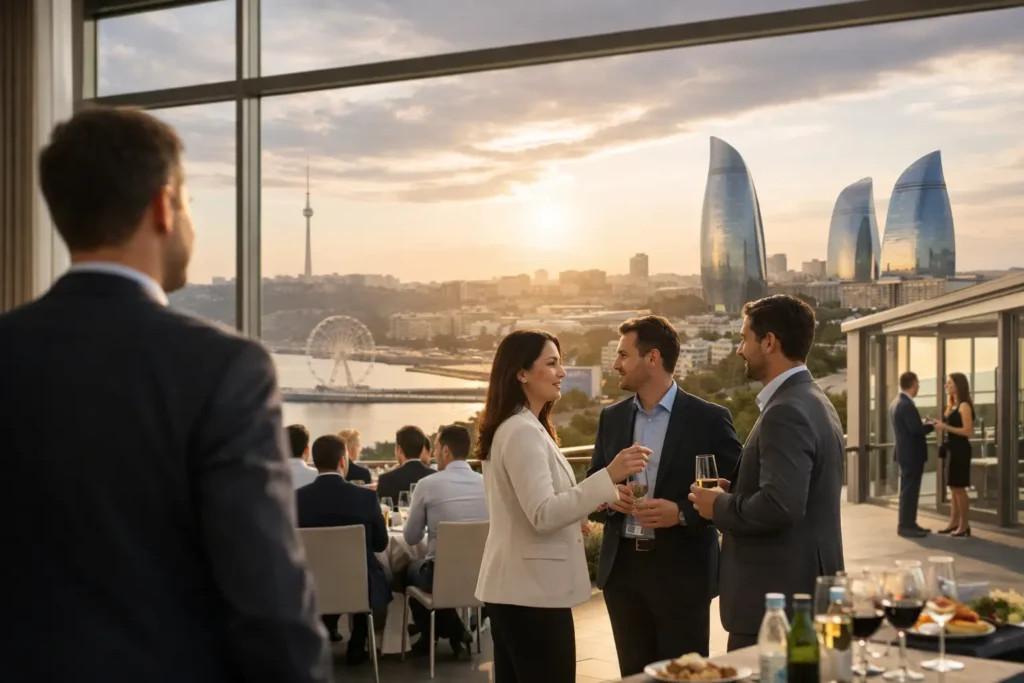
A corporate program can look straightforward on a proposal and become complicated the moment delegates land at GYD. Flight timings shift, executive arrivals need separate handling, a gala setup runs behind schedule, and a city program must still return guests to the hotel on time. For agencies and MICE planners, Baku corporate events succeed when destination appeal is supported by disciplined ground operations.
Baku is well suited to conferences, incentives, leadership meetings, product launches, and reward programs. Its modern waterfront, distinctive architecture, growing hotel inventory, and access to heritage and nature experiences give planners room to shape programs beyond the meeting room. The practical question is not whether the destination is attractive. It is whether every moving part can be coordinated locally under one accountable operating team.
What Makes Baku Corporate Events Work
The strongest Baku programs are designed around the group’s business purpose first. A two-night board meeting requires a different operating model from a five-day incentive, a regional sales conference, or a dealer recognition program. Delegate profile, arrival pattern, room requirements, meeting format, dietary needs, language coverage, and the desired balance between business and destination experiences should shape the proposal from the outset.
Venue selection is especially dependent on program objectives. A hotel ballroom may be the right choice for a conference requiring integrated accommodation and meeting space. A private dining venue or rooftop setting can suit a smaller leadership group. For gala evenings, planners may prefer a character-led venue that adds a sense of place without creating difficult transfer timings or production limitations. Capacity alone is not enough. Access, loading arrangements, technical specifications, backup timing, and guest flow all affect how the event performs on the day.
Accommodation contracting should follow the same logic. For compact programs, placing delegates in one primary hotel can simplify transfers, meeting attendance, and communication. Larger groups may need a split-hotel solution, which is entirely workable when transport rotations, hospitality desks, and meeting access are mapped carefully. A local DMC should present options based on operational fit, not simply room availability.
Arrival Management Is Part of the Event Experience
Airport operations set the tone for the entire program. Groups arriving across multiple flights need a clear manifest process, appropriately sized vehicles, multilingual meet-and-greet coverage, and a practical contingency plan for delayed arrivals. VIP guests may require separate transfers, while larger delegations benefit from visible coordination points and baggage handling procedures that reduce waiting time.
The distance between airport, hotel, venue, and evening locations matters when building the schedule. A well-designed itinerary protects time for check-in, refreshment, and delegate recovery before a formal welcome or opening session. Trying to fill every hour can create pressure on guests and on the operations team. A realistic program feels polished because it has room to absorb normal travel variables.
Designing a Program Beyond the Conference Room
Corporate groups come to Azerbaijan for business, but the destination component is often what makes the program memorable. In Baku, this can be delivered through carefully timed city experiences that combine contemporary landmarks with the Old City’s cultural heritage. The right format depends on group size, mobility requirements, and the available window between business sessions.
For short stays, an evening panorama, hosted dinner, or curated city orientation may be more effective than an overpacked half-day tour. For incentive groups with more time, the Absheron Peninsula offers options including Gobustan, the mud volcanoes, Ateshgah, and Yanar Dag. These experiences can work as full-day programs, but they require proper route planning, meal timing, guide allocation, and vehicle dispatch.
Regional extensions add another dimension for groups seeking a reward-led itinerary. Gabala, Shamakhi, Nohur Lake, Shahdag, Tufandag, Guba, and Sheki can be incorporated into multi-day programs when the event schedule permits. Mountain and nature components are best treated as purposeful extensions rather than rushed add-ons. The value comes from the setting, accommodation experience, and paced program design, not from trying to cover too many locations in a single day.
Team Activities Need a Clear Business Role
Team-building should not be inserted into an itinerary simply because it is expected. The most effective activities reinforce the group’s objective: collaboration, recognition, leadership, or shared discovery. A destination challenge in Baku, a cultural workshop, a guided culinary format, or a regional activity can all work well when designed for the group’s energy level and time available.
There is a trade-off between ambition and execution. Highly customized activities can create a strong emotional impact, but they also demand more production time, staffing, permits, materials, and rehearsal. For a short lead-time group, a refined, well-managed format is often the safer choice. A dependable DMC will advise where customization adds real value and where operational simplicity better protects the program.
Ground Handling That Protects the Planner’s Reputation
MICE delivery is judged in details that guests may never see: accurate rooming lists, vehicle schedules, guide briefings, signage placement, meal reconfirmations, technical coordination, and real-time communication between the airport team, hotel, venue, and event producer. These details determine whether the planner is free to focus on stakeholders or is forced to solve local issues personally.
A single local point of contact is valuable because it reduces fragmented communication. Rather than coordinating separately with hotels, transport suppliers, guides, restaurants, and excursion providers, the agency or event planner works through one accountable operations structure. This is particularly important for white-label delivery, where the local partner’s performance directly reflects on the agency’s brand.
Transport planning requires more than reserving coaches. Vehicle type, luggage volume, transfer duration, access restrictions, parking, and staggered departures all need to be considered. For executive movements, premium vehicles and discreet timing may be appropriate. For conferences, coach rotations and clear dispatch control are usually more important. The best approach depends on the group profile and agenda, not a standard fleet template.
Language support should be planned early as well. English may be sufficient for one group, while another requires multilingual guides, hostesses, or on-site coordinators. Translation needs for meetings, printed materials, delegate communication, and tours must be confirmed separately. Assuming one language solution covers every event can create avoidable gaps.
How to Build a Reliable Baku MICE Proposal
A strong proposal begins with a complete brief. At minimum, the operating team needs estimated group size, travel dates, arrival and departure patterns, preferred hotel category, meeting requirements, room setup, meal plan, program priorities, and any VIP or production needs. If the brief is still developing, planners should identify the non-negotiables first: budget range, event purpose, timing, and delegate profile.
The quotation process should show clear inclusions, operational assumptions, and alternative options where relevant. For example, a proposal may present two hotel combinations, a city-based incentive format and a regional extension, or different transport configurations based on final attendance. This gives the agency flexibility while keeping the operational basis transparent.
Lead times matter, especially for high-demand dates, large room blocks, major event space, and specialized production. Early planning creates more choice and makes it easier to secure suitable allotments. However, fast quotation turnaround remains essential when agencies are competing for a corporate brief. The local DMC must be able to translate an initial inquiry into a workable program quickly, then refine it without losing control of the details.
Before final confirmation, the program should move from concept to an operating document. This includes updated manifests, rooming lists, transfer schedules, event orders, guide assignments, venue timings, emergency contacts, and a day-by-day run sheet. A site inspection can be useful for complex events, high-profile groups, or bespoke production, though it is not necessary for every program. The decision depends on scale, stakeholder expectations, and the level of customization.
A Local Partner for Confident Delivery
For international agencies and event planners, the goal is not simply to source services in Baku. It is to deliver a program that feels controlled, responsive, and aligned with the promise made to the client. Brilliant Travel supports this through end-to-end ground handling, hotel and venue coordination, transportation, multilingual staffing, destination programming, and on-site event execution across Azerbaijan.
The most successful corporate event is rarely the one with the longest itinerary or the most elaborate production. It is the one in which every detail supports the client’s purpose, delegates feel looked after, and the planner can trust the local team to act quickly and professionally when the schedule changes. Start with the operational brief, build the destination experience around it, and give the program the local structure it needs to run to plan.