
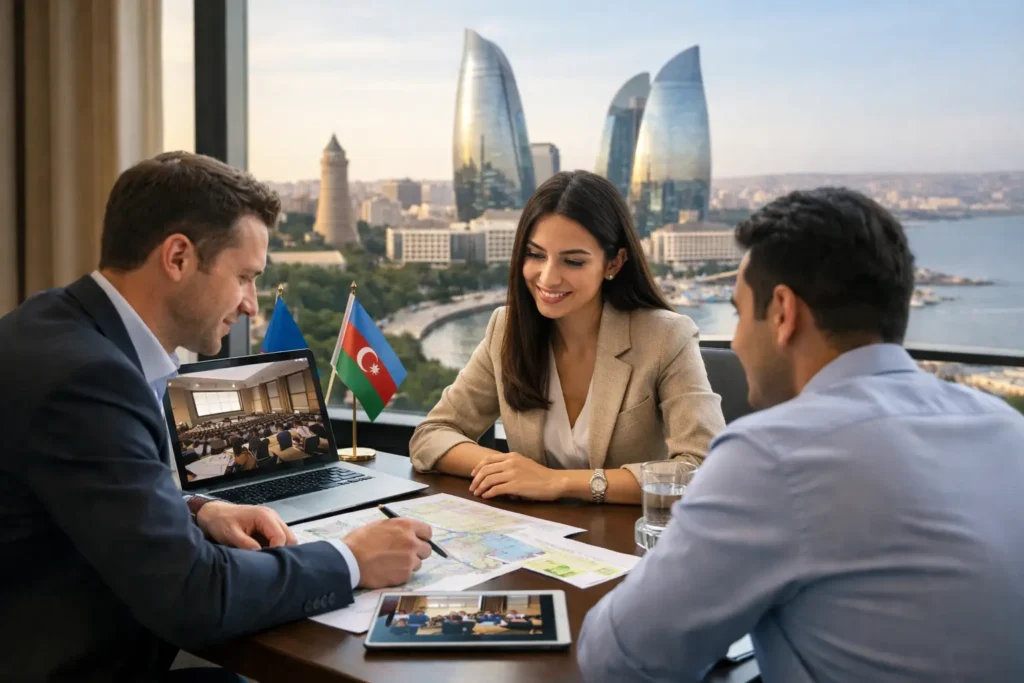
A Baku conference can look straightforward on a proposal: a hotel meeting room, airport transfers, a gala dinner, and perhaps a city program. The operational reality is more connected. Knowing how to coordinate Baku conferences means aligning arrival patterns, venue access, rooming lists, technical requirements, transport timing, and delegate experience under one accountable local plan.
For international agencies and MICE planners, the priority is not simply finding a suitable space. It is delivering a program that reflects well on the organizing brand from the first airport welcome through the final departure transfer. A strong local DMC turns separate suppliers into one managed operation, with clear ownership and contingency planning throughout.
Start With a Conference Brief That Can Be Operated
The best conference planning begins with information that is specific enough for suppliers to act on. Before requesting a proposal, define the expected delegate count, source markets, preferred dates, arrival and departure windows, room-night pattern, meeting format, and event objectives. A leadership conference, distributor meeting, product training, and incentive-linked congress may use the same city, but they require very different operational designs.
Clarify whether the program needs a plenary room only or parallel breakouts, exhibition space, private dining, VIP holding areas, interpretation, branding zones, registration desks, and technical rehearsals. Also identify the decision-makers early. When venue, production, and ground handling approvals move through different contacts, a detailed responsibility matrix prevents late changes from affecting the wider program.
For larger groups, it is useful to build the brief around three schedules: the delegate schedule, the organizer schedule, and the supplier schedule. Delegates need a simple experience. Organizers need access, timing, and control points. Suppliers need exact loading, setup, service, and breakdown windows.
Select a Venue Around Operations, Not Just Capacity
Baku offers a varied inventory of city hotels, dedicated event facilities, waterfront venues, and distinctive dining spaces. Capacity matters, but it should not be the only filter. A room that fits 300 theater-style delegates may still create pressure if its foyer is too small for registration, coffee service, sponsor displays, or networking flow.
Review access routes for coaches and service vehicles, loading arrangements for production equipment, ceiling height for staging, power availability, Wi-Fi specifications, and the distance between guestrooms and meeting areas. For events with simultaneous sessions, inspect sound separation between rooms and the practicality of moving delegates during breaks.
Venue selection also depends on the program rhythm. A compact hotel-based conference can simplify transfers and keep attendees focused. A split-venue format may create a stronger sense of occasion, particularly for an opening reception or gala dinner, but it adds movement, timing, and guest-flow considerations. Neither approach is automatically better. The right choice depends on group profile, budget framework, brand expectations, and how much time can realistically be assigned to transfers.
Build Technical Planning Into the Venue Decision
Audio-visual planning should start before contracts are finalized, not after the agenda is published. Confirm presentation formats, screen placement, confidence monitors, stage dimensions, microphones, lighting, recording requirements, remote speaker connections, and backup equipment. If interpretation is required, allow for booths, receiver distribution, technician positions, and language-specific delegate instructions.
A technical site inspection is especially valuable when the event includes panel discussions, awards, live demonstrations, or high-level executive presentations. It identifies practical limitations while changes are still affordable and easy to implement.
Coordinate Arrivals From Heydar Aliyev International Airport
Arrival handling shapes the first impression of the conference. Delegates may land on different flights, at different times, with varied levels of familiarity with the destination. Rather than relying on a single transfer plan, segment the operation by arrival wave, hotel destination, VIP status, and any pre-conference activities.
A reliable airport plan includes meet-and-greet staffing, clearly branded identification where appropriate, a live flight-monitoring process, vehicle allocation, dispatch communication, and a defined escalation contact for organizers. For groups arriving within a narrow period, the welcome area, luggage flow, and coach dispatch sequence should be mapped in advance.
The same discipline applies at departure. Confirm final flight details against the latest rooming list, communicate pickup times through the approved delegate channel, and allow for different terminal, airline, and group check-in requirements. A departure operation that feels calm and organized protects the overall memory of the program.
Design Transport as a Managed Guest Journey
Conference transport is not just a fleet requirement. It is a timetable management exercise. Delays at one point can affect registration, catering, speaker preparation, and session start times. The transport plan should therefore account for route planning, dispatch points, vehicle rotation, host assignments, VIP protocols, and contingency vehicles.
For a hotel-to-venue shuttle, use scheduled waves based on the meeting agenda rather than moving every guest at once. This reduces congestion at hotel entrances and registration desks. For off-site dinners or evening programs, consider how guests will return in stages, especially if the event agenda includes optional networking time.
Vehicle type should match the group profile and program design. Executive sedans may be appropriate for senior speakers and hosted VIPs, while minibuses and coaches support group movements efficiently. The operational value lies in having a transport manager who can adjust the plan in real time when a flight changes, a session runs late, or an additional vehicle is needed.
Give Delegates a Reason to Experience Baku
A conference itinerary is stronger when it includes purposeful local content without overloading the agenda. Baku works well for short city orientations, hosted dinners, and post-conference programs that combine culture, architecture, and Caspian-facing settings. For groups with more time, the Absheron Peninsula and Gobustan can add a distinct regional dimension to the event program.
The key is timing. A full-day excursion immediately after an intensive conference may not suit every corporate audience. A shorter guided city program, a curated heritage visit, or a well-planned evening function can offer more value when delegates have limited availability. Incentive extensions to Gabala, Shahdag, or other regional routes should be treated as separate operational modules, with their own accommodation, transport, and activity planning.
Cultural programs should also be adapted to the group. Some clients want a formal hosted experience with reserved dining and entertainment. Others prefer time for independent exploration supported by clear transfer arrangements and local host assistance. A flexible program structure gives agencies room to match the experience to their client’s objectives.
Protect the Event With Clear Control Points
The difference between a well-planned conference and a well-executed one is often the on-site control structure. Every event needs named leads for venue liaison, transport dispatch, registration, guest relations, production coordination, and organizer communication. These roles should be understood before the first delegate arrives.
A final operational document should consolidate the latest agenda, room setup plans, supplier contacts, flight information, transfer schedules, rooming updates, VIP movements, dietary requests, and emergency contact process. It should be treated as a live document, not a file that is circulated once and forgotten.
Daily organizer briefings are equally useful. A short meeting before the program begins can confirm what changed overnight, what is coming next, and where decisions may be required. After the main program concludes, a debrief helps capture feedback while details are current and supports better planning for the next edition.
Work With One Accountable Ground Partner
Conference planners often need multiple local services at once: hotel contracting, meeting-space sourcing, production coordination, airport handling, transport, guides, restaurants, and regional extensions. Managing each element independently can appear flexible, but it also creates gaps in communication and unclear ownership when schedules change.
A local DMC provides one point of coordination across those moving parts. For trade partners, that means proposals can be structured around the actual event brief, supplier confirmations can be consolidated, and the organizer has a local operations team focused on execution rather than a collection of separate contacts.
Brilliant Travel supports Baku conference programs with tailored MICE ground handling, from venue and hotel coordination to airport operations, transport management, delegate programs, and on-site support. The objective is simple: give agencies and event planners a dependable local framework that protects their client relationship and makes Azerbaijan easier to sell with confidence.
The most effective conference plan is rarely the one with the longest agenda or the most elaborate production. It is the one in which every delegate movement, supplier handover, and organizer decision has been considered early enough to feel effortless on the day.