
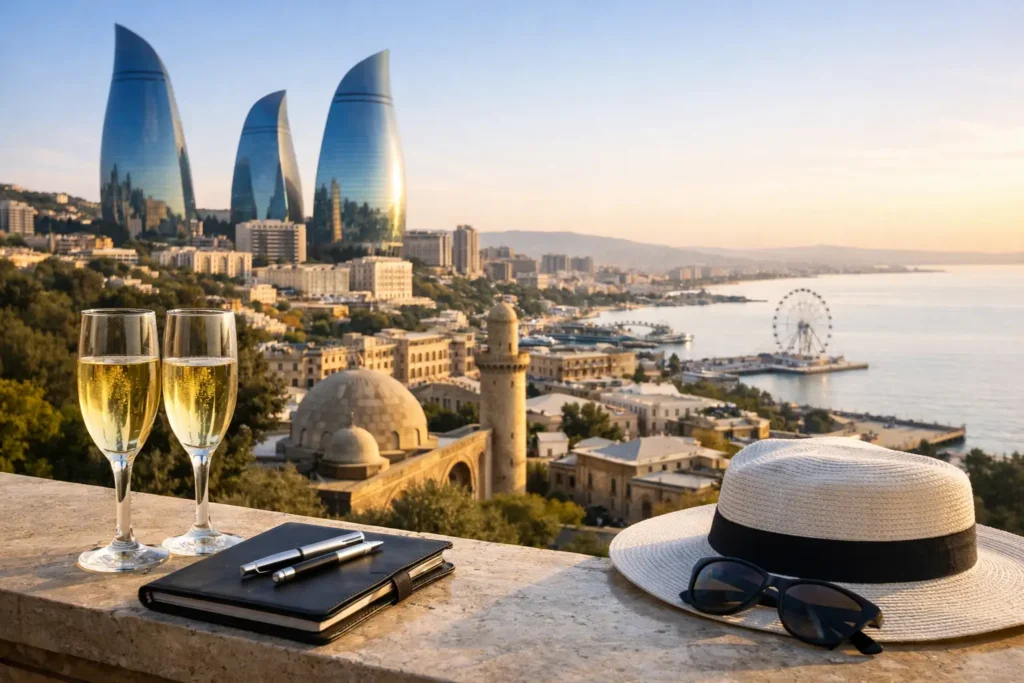
A premium dinner overlooking Baku’s illuminated skyline, a private heritage program on the Absheron Peninsula, and a mountain activity the following day can all fit within one well-managed incentive itinerary. That combination of contrast and operational practicality is shaping Azerbaijan incentive travel trends for 2026. For MICE agencies and corporate travel planners, the destination is increasingly relevant not because it relies on one signature experience, but because it can support a complete reward journey with efficient ground handling.
The most successful programs are moving beyond a schedule of sightseeing and restaurant reservations. They are designed around recognition, participation, and a clear sense of place, while allowing enough flexibility for arrival patterns, group size, corporate preferences, and seasonal conditions. Azerbaijan’s value lies in how Baku’s contemporary event infrastructure can connect with heritage, countryside, and mountain experiences within a single program.
Azerbaijan Incentive Travel Trends: More Meaningful Programs
Incentive groups still expect polished hotels, strong gala venues, and memorable dining. What is changing is the demand for experiences that feel earned rather than interchangeable. A city tour is more effective when it becomes an after-hours Old City route with local storytelling, a hosted culinary element, or a private cultural performance suited to the client’s event format.
This does not mean every activity needs to be elaborate. In many cases, a thoughtfully paced itinerary has more impact than an overloaded one. Corporate groups often need time to network, recognize top performers, and absorb the destination. A reliable local operating plan should build in realistic transfer times, venue access, comfort breaks, and contingency options without making the program feel mechanical.
For agencies, this shift places more emphasis on program design. The right question is not simply which excursions are available. It is which experiences reinforce the client’s incentive objective: team connection, leadership recognition, dealer engagement, or a high-value reward for top achievers.
Baku remains the operational anchor
Baku is the natural base for many short- and medium-haul incentive programs. International arrivals, major hotels, meeting venues, restaurants, waterfront settings, and evening entertainment can be coordinated from one city base. This helps planners keep the first and final days efficient, particularly when groups arrive on different flights or require branded airport welcomes and coordinated luggage handling.
The city also supports a useful contrast in tone. Contemporary architecture and the Caspian waterfront can frame a modern corporate welcome, while the Old City provides a more historic setting for guided walks, receptions, and curated dining. For groups with limited time, this range reduces the need to move hotels simply to create variety.
That said, a Baku-only program is not automatically the strongest option. If the group has three or more nights and the incentive brief calls for outdoor activity, a regional extension can create a more distinctive reward experience. The decision depends on the profile of participants, meeting requirements, and the amount of travel time the client considers acceptable.
Shorter Itineraries, Better Sequencing
One of the clearest trends is the preference for compact programs that still feel substantial. Corporate calendars are tight, and many incentive groups are planned around three to five nights. This places pressure on every transfer, meal service, and activity handover.
A practical structure may begin with a Baku arrival and welcome evening, followed by a city and Absheron day with a formal recognition dinner. A third day can introduce Gobustan’s cultural landscape and mud volcanoes, or it can be reserved for a meeting session and a tailored team experience. Groups with additional time can continue toward Gabala, Shamakhi, or a mountain resort, depending on the season and program objective.
The operational lesson is simple: avoid treating every destination feature as mandatory. Gobustan, Ateshgah, Yanar Dag, Nohur Lake, Shahdag, Tufandag, Sheki, and Guba each have a role, but not every route belongs in every proposal. A well-built itinerary prioritizes pace and cohesion over a long checklist of attractions.
For partner agencies, a DMC should be able to present route options with clear driving logic, hotel movement implications, and alternative formats. This allows the agency to sell a program confidently without having to translate local logistics into a workable guest experience.
Outdoor Experiences Are Becoming More Structured
Nature and light adventure continue to add value to incentive travel, especially for groups that want a break from ballroom programming. The trend is not toward extreme activity. It is toward accessible, professionally coordinated experiences that accommodate mixed ages, varied fitness levels, and different levels of confidence.
Mountain resorts in the Shahdag and Gabala regions can provide a change of environment for team activities, scenic lunches, cable car experiences, and informal networking. Nohur Lake and surrounding nature routes offer a calmer alternative for groups seeking scenic downtime rather than a high-energy schedule. In the north, a Guba and Khinalig extension can suit smaller groups with an interest in landscapes and cultural context, subject to the program’s timing and transport plan.
Seasonality matters. Winter programs may prioritize mountain resort atmosphere and indoor event flow, while spring through fall can support broader outdoor scheduling. The right recommendation should be based on the group’s dates, size, mobility profile, and required standard of accommodation rather than a fixed template.
Team-building needs a local purpose
Generic team-building formats can be delivered almost anywhere. Incentive planners are increasingly asking for activities connected to the destination, whether that means a culinary challenge, a heritage-focused quest, a locally inspired craft session, or a photo-based city challenge.
The execution standard matters as much as the concept. Clear briefing, transportation staging, multilingual facilitation, weather-appropriate timing, scoring mechanics, and a credible prize or recognition moment turn an idea into a corporate-ready activity. Poorly managed team-building can undermine an otherwise premium program, particularly when participants have limited time and high expectations.
Gala Events Are Moving Toward Place-Led Design
The gala remains a central incentive moment, but the preferred format is becoming more tailored. Rather than relying only on a conventional banquet room, planners are looking for venues and event styling that give the evening a distinct local identity while preserving corporate production standards.
A waterfront setting, a refined city venue, a heritage-inspired space, or a resort environment can each work, depending on guest count and event production needs. The design should consider arrival experience, branding opportunities, stage sightlines, entertainment timing, menu service, and return transportation from the outset. A beautiful location without a workable movement plan creates avoidable pressure for both guests and organizers.
Cultural content can add depth when it is selected with care and integrated naturally into the event flow. It should support the corporate message, not distract from it. For many groups, a concise live performance or a locally influenced welcome element is more effective than an extended program that delays awards, speeches, or dinner service.
What MICE Planners Need From Their Azerbaijan Partner
As incentive programs become more customized, dependable ground operations become a commercial advantage. Agencies need accurate quotations, realistic program timings, supplier coordination, and one accountable local team from airport arrival through departure. They also need flexibility when a flight schedule changes, a delegate requires special assistance, or a gala setup needs an additional rehearsal window.
The strongest DMC relationship is built before the group travels. That means clarifying the client’s decision-making priorities early: Is the group driven by luxury, activity, cultural access, meeting content, or recognition? Are attendees traveling as couples? Is there a preferred hotel brand or a need for multiple room categories? Does the agency require white-label documentation and dedicated account management?
These details shape the proposal, the contracting process, and the on-site delivery plan. They also reduce last-minute amendments that can affect budget control and participant experience.
For larger groups, transport planning deserves particular attention. Vehicle allocation, luggage flow, guide ratios, airport meet-and-greet points, hospitality desk coverage, and restaurant seating must operate as one plan rather than separate supplier bookings. The same applies to regional circuits, where hotel check-in sequencing and coach movement determine whether a scenic journey feels relaxed or rushed.
Build the Program Around the Reward
Azerbaijan is well positioned for incentive travel because it offers urban energy, cultural heritage, regional landscapes, and adaptable event settings within a destination that can be managed as one connected ground operation. The most relevant trend for 2026 is not a single activity or venue. It is the move toward programs that feel personal, well-paced, and operationally assured.
For agencies developing a Baku-based incentive or a multi-region reward itinerary, the best starting point is a clear brief: group profile, travel window, desired recognition moments, meeting needs, and the level of destination discovery expected. Brilliant Travel can translate that brief into a practical Azerbaijan program with coordinated hotels, transport, guides, experiences, and event delivery – giving partners a proposal they can present with confidence.