Baku MICE Guide for Confident Event Delivery
A successful Baku MICE guide must do more than name venues and attractions. For agencies and event planners, the real question is whether the destination can support a polished program from airport arrival through final departure – with clear timings, appropriate hotels, reliable transport, and one accountable local team. Baku answers that question well when the program is designed around its strengths: a compact business center, a broad hotel mix, flexible event infrastructure, and memorable extensions across Azerbaijan.
For international operators adding Baku to a meetings, incentives, conferences, and exhibitions portfolio, the opportunity lies in combining a contemporary capital-city event with experiences that feel distinctly local without creating unnecessary operational complexity.
Why Baku Works for MICE Programs
Baku brings together elements that are often difficult to find in one destination. Delegates can move from an international-standard meeting environment to the waterfront, the UNESCO-listed Old City, modern architecture, and the Absheron Peninsula within a manageable program radius. This gives planners more freedom to create agendas that feel purposeful rather than over-scheduled.
The city is particularly effective for regional conferences, corporate meetings, reward trips, executive retreats, product launches, and association programs. Large events may require early venue and room-block planning, while smaller executive groups can benefit from more tailored restaurant, cultural, and private-event options. The correct approach depends on group size, meeting format, brand requirements, and the balance between business content and destination activity.
Heydar Aliyev International Airport provides a practical arrival point for international groups, and Baku’s core business and hotel districts allow for efficient transfer planning. That said, arrival waves should always be mapped in advance. A group landing across multiple flights needs phased meet-and-greet staffing, vehicle dispatching, luggage coordination, and a clear communication protocol, not simply a standard airport transfer.
Baku MICE Guide: Start With the Program Architecture
A strong MICE proposal begins with the operating framework, not the gala dinner concept. Before confirming hotels or venues, a local DMC should establish the delegate profile, flight pattern, rooming structure, technical requirements, dietary needs, VIP movements, and decision-making timeline. These details shape every part of the ground arrangement.
For a two-night business meeting, the most efficient structure may be airport transfers, a hotel-based conference, one carefully selected city experience, and a closing dinner. A three- or four-night incentive can support a more layered program, with Baku city experiences followed by Gobustan and the Absheron Peninsula, or a mountain extension toward Gabala, Shahdag, or Tufandag.
Trying to fit too many locations into a short itinerary is a common planning error. Baku has enough content for a well-paced program, and regional extensions work best when the group has sufficient time and when the experience supports the incentive objective. A sales reward group may value shared activities and scenic settings, while an executive leadership group may need privacy, shorter travel times, and discreet service.
Meeting Venues and Technical Planning
Baku offers hotel meeting rooms, conference facilities, cultural venues, restaurants with private areas, and event spaces suitable for different group formats. Venue selection should be based on more than maximum capacity. Planners should assess ceiling height, stage access, breakout-room configuration, loading arrangements, registration flow, catering service, branding opportunities, and the technical specification required for the session.
For conferences involving simultaneous interpretation, panel discussions, live production, or hybrid participation, technical planning should start early. A detailed production brief should define microphones, screens, lighting, confidence monitors, interpretation equipment, backstage requirements, rehearsals, and backup procedures. It is more efficient to align the venue, audiovisual supplier, and event schedule before content teams finalize their run of show.
A hotel ballroom can simplify delegate flow and reduce transfers, especially for a short conference. A stand-alone venue may create stronger visual impact for an opening ceremony or gala, but it introduces additional transport, access, and timing considerations. Neither option is automatically better. The right choice depends on the event’s priorities.
Hotel Strategy and Room Block Management
Baku’s hotel inventory allows planners to position groups across international-style business hotels, luxury properties, and practical midscale options. For MICE groups, the priority is often not the room alone but the relationship between the hotel, meeting venue, restaurants, and planned city movements.
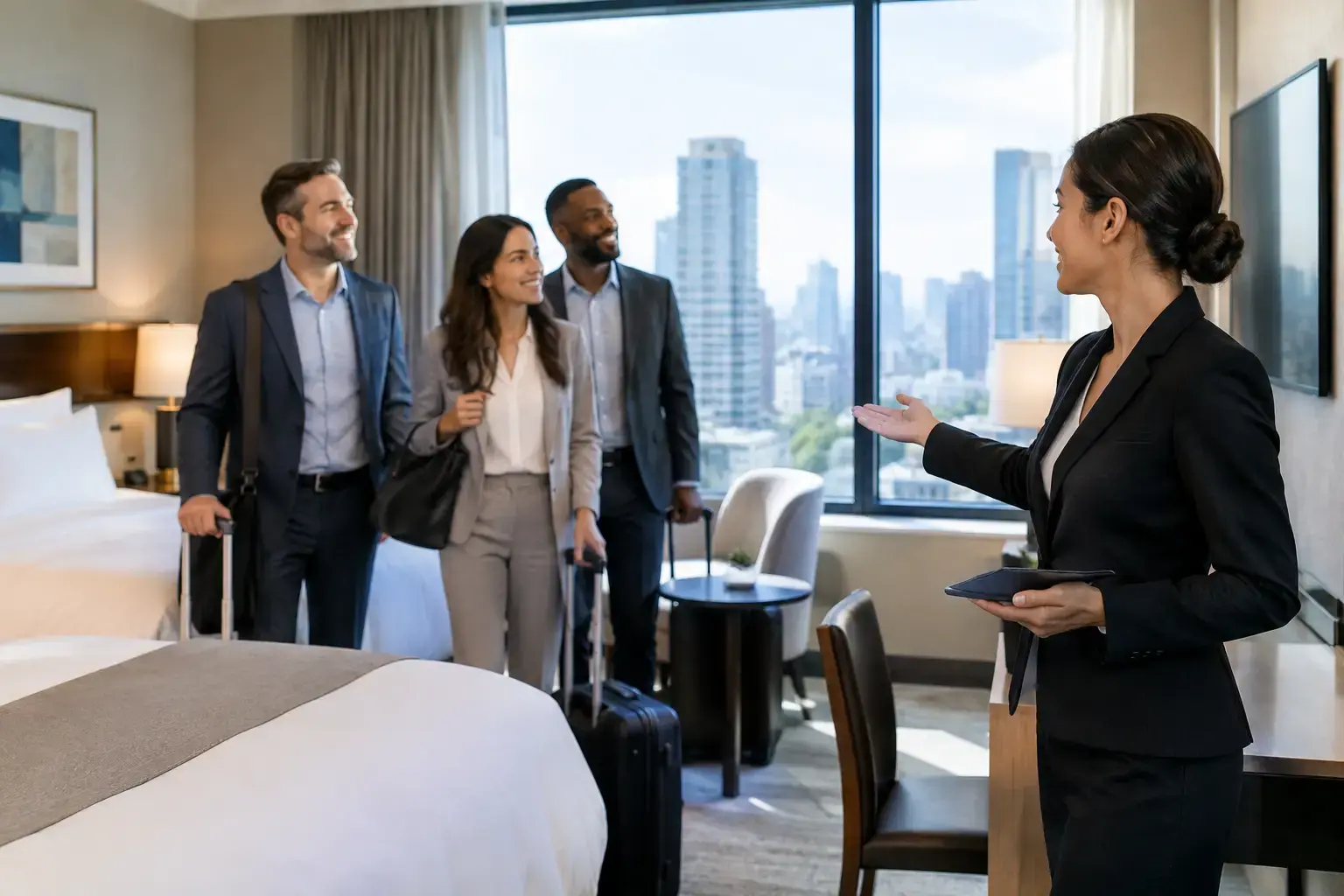
Room block negotiations should consider single and twin requirements, executive and VIP categories, early-arrival and late-departure needs, meeting space release terms, and staff room allocation. A group with delegates arriving from several markets may need a flexible first-night rooming approach. Similarly, groups with a high proportion of senior guests may require a more considered allocation plan close to elevators, event floors, or dedicated hospitality areas.
A dependable ground partner can coordinate rooming-list deadlines, special requests, welcome-desk arrangements, signage, and onsite liaison with hotel teams. This reduces the number of operational handoffs for the planner and helps protect the agency’s client experience.
Incentive Experiences That Feel Specific to Azerbaijan
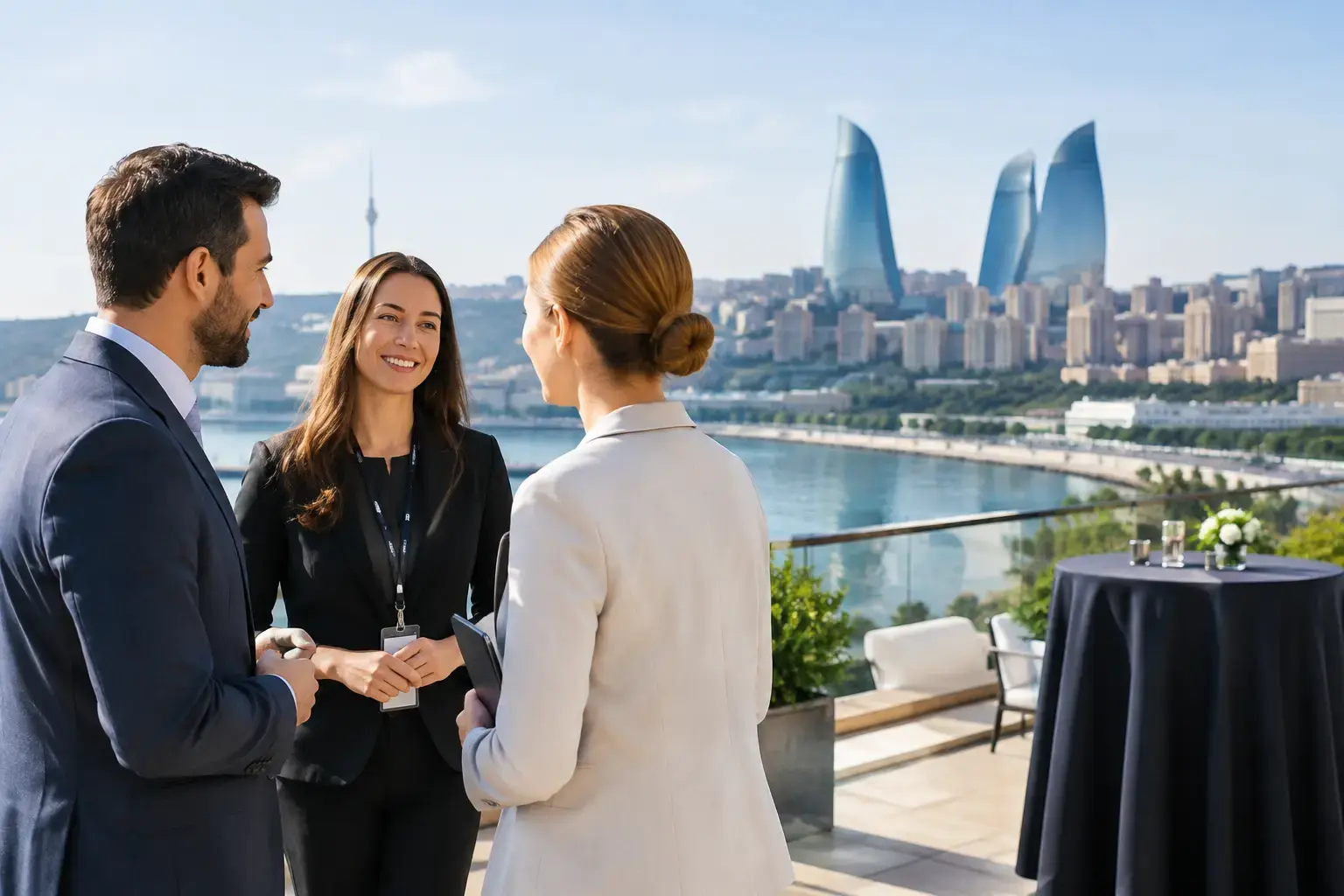
The best incentive programs use the destination as a reward, not as a checklist. In Baku, this can mean an evening reception overlooking the Caspian waterfront, a guided architectural route through the Old City and modern landmarks, or a private dining concept shaped around local flavors and entertainment appropriate to the group.
Beyond the capital, Gobustan can add an unusual landscape and heritage dimension to an incentive itinerary. The mud volcano area and rock-art setting create a strong contrast with Baku’s urban environment, especially when the day is planned with suitable transport, timing, refreshments, and participant comfort in mind. The Absheron Peninsula can also be integrated into a half-day or full-day program through cultural heritage sites and curated stops.
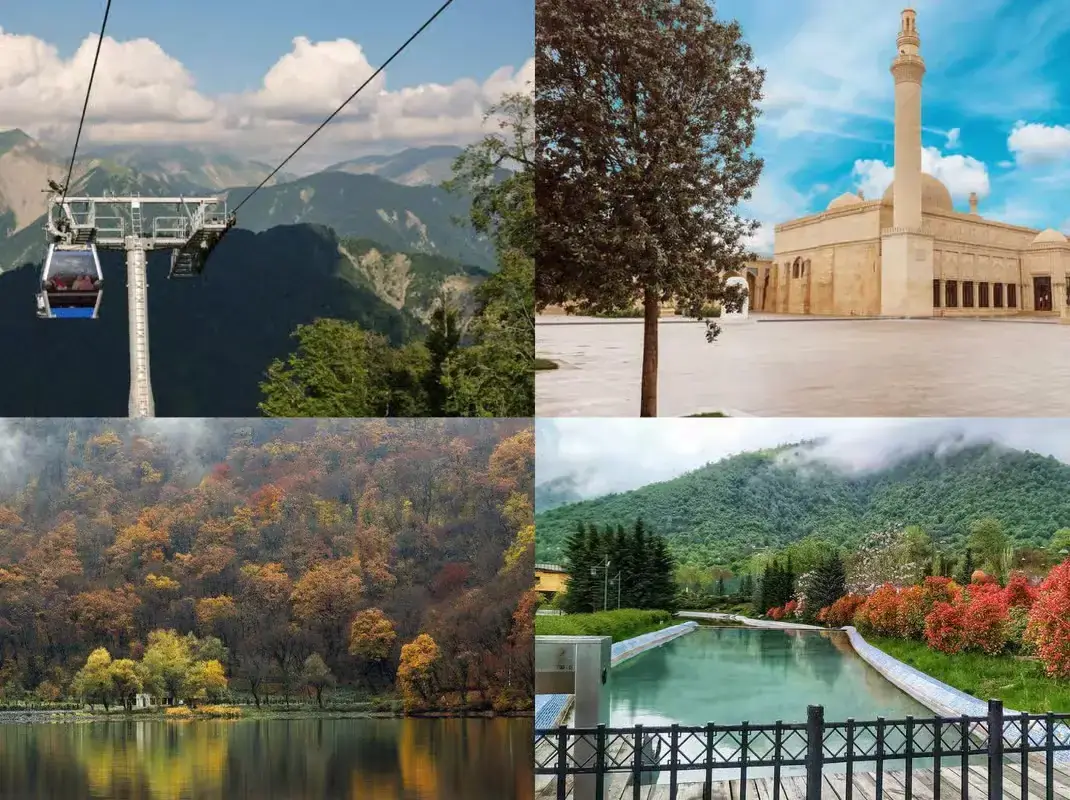
For longer incentives, Gabala and the mountain resorts offer a different pace. Scenic activities, team experiences, lakeside settings, and resort-based dinners can work well for groups seeking a more active or retreat-style format. These extensions require disciplined logistics: realistic drive schedules, luggage movements, meal timing, weather-appropriate activity design, and contingency options that maintain the program’s quality.
Transportation Is an Event Function, Not a Transfer Line
MICE transportation in Baku should be planned as part of the event operation. Vehicle sizing, convoy sequencing, hotel loading zones, police or venue access requirements where applicable, guide deployment, and real-time communication all affect how delegates experience the program.
For large groups, staggered transfers are often more effective than trying to move every participant at once. Clear coach numbering, visible coordinators, guest manifests, and a defined lost-and-found process reduce friction at busy moments. For VIPs, speakers, and senior management, separate movement plans should be coordinated discreetly with the core event schedule.
Multilingual guides and hosts also play an operational role. They manage timing, communicate schedule changes, support guest flow, and provide destination context without turning every transfer into a lecture. Language allocation should reflect the actual delegate mix, particularly for groups combining several source markets.
Build in Controls Before Guests Arrive
The difference between a promising proposal and a dependable MICE program is usually found in the operating detail. A complete event file should cover contact lists, flight tracking, transfer manifests, rooming lists, venue layouts, catering orders, dietary requirements, signage plans, supplier timings, emergency contacts, billing instructions, and an approved escalation path.
A pre-event inspection is valuable for complex programs, new venue combinations, and high-visibility events. It allows the planner and local team to test guest routes, identify bottlenecks, confirm branding positions, review menu presentation, and agree on decision points before delegates arrive. Where an inspection is not possible, thorough visual documentation and structured briefing calls become even more important.
During delivery, a single point of contact should coordinate updates across the agency, client representatives, hotels, transport teams, guides, and suppliers. This avoids conflicting instructions and allows decisions to be made quickly when schedules evolve.
Selecting a Local DMC for Baku MICE
For agencies and corporate event partners, a Baku DMC should be evaluated on response quality as well as destination knowledge. Fast quotations matter, but accuracy matters more. The proposal should show that the team understands group flow, production needs, contracting timelines, and the responsibility of delivering under another brand.
Ask how the DMC manages hotel contracting, transport dispatch, multilingual staffing, regional extensions, onsite coordination, and post-event reconciliation. Request a clear scope of service and practical alternatives where a preferred venue, hotel, or activity is not the best operational fit. A capable local partner will explain trade-offs early instead of presenting every request as equally straightforward.
Brilliant Travel supports agencies and MICE planners with tailored Azerbaijan ground programs, from Baku conference operations to multi-day incentive circuits. The aim is simple: give partners a well-costed, clearly managed proposal and a local delivery team that protects the confidence their clients place in them.
The most effective Baku MICE program is not the one with the longest itinerary. It is the one where every movement has a purpose, every supplier knows the plan, and delegates leave with a clear impression of both the destination and the organization that brought them there.