
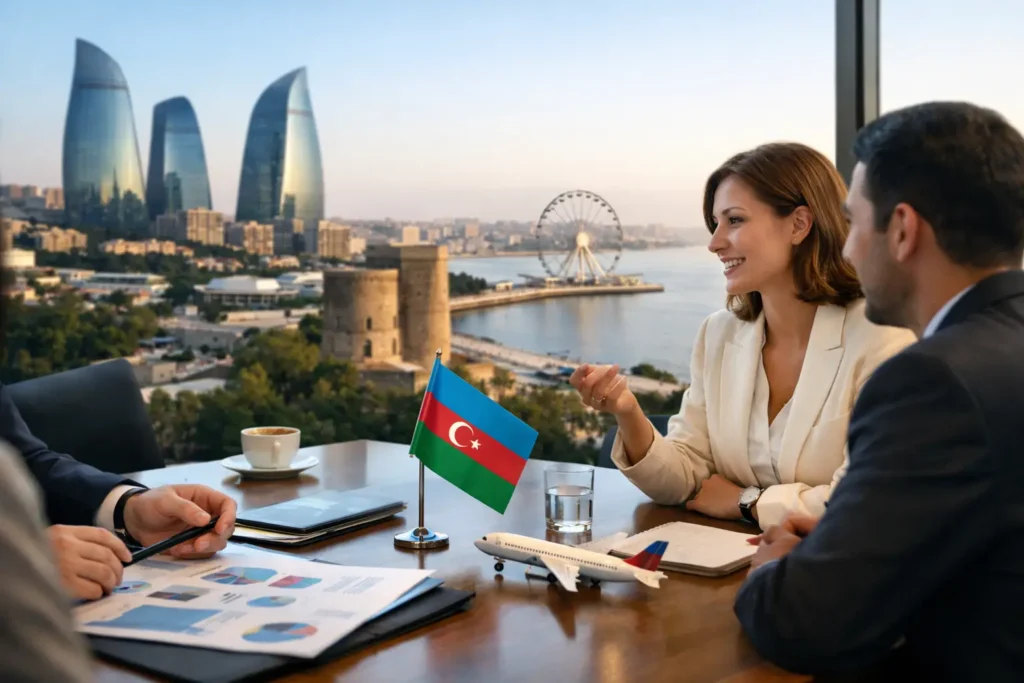
A 100-person incentive can look straightforward on a proposal and become highly complex the moment delegates land at GYD. Arrival banks, rooming-list changes, executive movements, branded transfers, dietary requests, and the timing of one gala dinner all need to work together. This azerbaijan mice planning guide is designed for agencies and corporate event planners that need to turn a destination concept into a controlled, sellable, and well-executed ground program.
Azerbaijan is particularly effective when a program needs a modern city base, distinctive cultural experiences, and accessible regional extensions within one itinerary. The planning priority is not simply selecting attractive venues. It is designing a program flow that protects meeting time, gives delegates a clear sense of place, and leaves operational margin for a smooth experience.
Start With the Program Objective
MICE planning works best when the destination brief is translated into operational requirements early. A leadership meeting, dealer conference, recognition incentive, and product launch may all use Baku as a base, but each needs a different pace, venue profile, and transport plan.
For a conference-led group, establish the meeting agenda first. Confirm the required room setup, breakout count, registration footprint, technical specifications, meal windows, and access times for build-up and dismantling. Once these are fixed, the hotel and venue shortlist becomes more accurate. Choosing a hotel for its location alone can create unnecessary offsite transport or limit flexibility during the working day.
For incentive travel, the balance changes. Delegates still need efficient airport handling and reliable accommodation, but the program must create rewarding shared moments. A Baku city experience, a heritage-focused excursion on the Absheron Peninsula, or a mountain extension through Gabala can each serve that purpose. The right choice depends on group profile, available nights, mobility considerations, and whether the event requires one major evening function or several smaller experiences.
A strong client brief should clarify the group size, nationalities and language needs, arrival and departure pattern, desired hotel category, meeting objectives, branding requirements, and approval timeline. It should also identify the non-negotiables. These may include a plenary capacity, a private dining venue, a specific rooming configuration, or an executive transfer standard. This prevents a proposal from being built around appealing ideas that cannot support the actual event requirements.
Azerbaijan MICE Planning Guide: Build the Right Program Flow
Baku is the natural operational center for many Azerbaijan MICE programs. Its hotel inventory, meeting facilities, city dining options, and airport access support conferences and incentives with short transfer times when the itinerary is properly sequenced. A typical program can pair a focused business day with an evening event, then reserve a full or half day for destination content rather than trying to fit too many visits around meeting sessions.
The most effective itineraries give each day a defined job. Arrival day should prioritize welcome, check-in, and a manageable first gathering. The core business day needs protected meeting time and a realistic evening schedule. The destination day should include enough content to feel meaningful without turning into a transport-heavy checklist. Departure day should allow for flight-specific transfer waves and individual executive requirements.
For groups with three or more nights, regional elements can add genuine incentive value. Gobustan and the Absheron Peninsula work well as day-program components from Baku, particularly when the group needs cultural and landscape contrast without changing hotels. Gabala, Nohur Lake, Shamakhi, and mountain resort areas such as Tufandag offer a different setting for a post-conference extension or a smaller leadership group. These routes require a more deliberate luggage, coach, meal, and accommodation plan, which is why they should be designed around the event agenda rather than added at the last minute.
Seasonality also shapes the program. Outdoor receptions, mountain activities, and Caspian-facing concepts can be positioned according to the travel period, while city-based venues provide dependable alternatives for formal functions. The practical question is not which format is universally best. It is which format supports the client’s objectives, group energy, and operating schedule.
Venue and Hotel Contracting Need One View
A hotel is not only a place for delegates to sleep. In a MICE program, it is a working environment, an arrival point, a security and access zone, a catering operation, and often the main event venue. Hotel contracting should therefore be evaluated alongside meeting space and logistics, not as a separate accommodation exercise.
Before confirming a property, review whether the plenary room can accommodate the preferred layout with appropriate sightlines, stage requirements, and registration space. Check the proximity and capacity of breakout rooms, the availability of pre-function areas, and the timing of meal service for the group size. If an offsite gala is planned, assess the coach movement, guest arrival sequence, weather-appropriate format, entertainment build time, and return-transfer dispatch.
Allotments and release dates should match the client’s registration cycle. Large groups rarely finalize rooming lists in one step, so the contracting strategy should allow the agency to manage attendee changes without losing operational control. The same applies to meeting equipment, private venues, and specialist entertainment. A local DMC can coordinate these elements under one program file, reducing the risk that separate suppliers work from different assumptions.
Transport Is Part of the Guest Experience
Transport is often treated as a back-office task until it becomes the visible weak point of an event. For MICE groups, it needs to be designed as a timed service operation. Flight schedules, coach capacity, luggage handling, hotel access, VIP movements, guide allocation, and event departure windows all affect the final plan.
Arrival handling should begin with an accurate flight manifest and a clear system for identifying delegates, hosts, and VIPs. Groups arriving across several flights may need staggered welcome points and departure waves rather than one oversized transfer operation. The same principle applies to departure day, when airline check-in timing, luggage collection, and early morning movements can vary substantially.
During the program, transportation should reflect the actual event rhythm. A coach standing by for a two-hour window may be necessary for a flexible schedule, while a fixed departure system may be better for a large gala. Executive sedans, minibuses, full-size coaches, guide vehicles, and luggage support should be planned as one fleet movement, with named operational responsibility on the ground.
Design Experiences That Work for Groups
Destination content should be selected for its ability to handle the group, not only for its visual appeal. A compelling site becomes difficult to enjoy when access, timing, capacity, or meal service are not aligned with delegate flow.
Baku offers useful layers for corporate programs: contemporary architecture, the Old City, waterfront settings, cultural venues, and dining concepts that can be adapted to different group formats. Beyond the city, Gobustan, mud volcano landscapes, Ateshgah, and Yanar Dag can create a distinctive heritage route. For longer programs, Sheki, Guba, Khinalig, Gabala, and Shahdag provide options for groups seeking a broader Azerbaijan circuit.
The best incentive experiences also include room for personalization. This may mean dividing a group into manageable activity rotations, creating hosted table plans for a gala, arranging multilingual guides by coach, or building a recognition moment into a dinner rather than treating entertainment as an add-on. These details help an agency deliver a program that feels designed for its client rather than assembled from standard excursions.
Protect Delivery With Clear On-Ground Control
A well-priced proposal is only the first stage of a successful MICE operation. The delivery plan should assign responsibility for each critical handoff: airport welcome, hotel check-in, meeting-room readiness, coach dispatch, guide briefings, venue access, meal timing, and final departures.
A detailed operational document is particularly valuable for programs involving multiple hotels, regional routing, or concurrent activities. It should include contact roles, service times, guest counts by movement, vehicle allocation, rooming-list milestones, dietary information, and contingency alternatives for schedule changes. The agency should receive clear updates without needing to coordinate individual suppliers directly.
Brilliant Travel supports this model through a single local point of coordination across accommodation, transport, guides, excursions, and event logistics. For international agencies, that structure protects the client relationship while giving the program team immediate access to local operational decisions.
The most effective Azerbaijan MICE programs are built from a realistic brief, not a collection of isolated ideas. When meeting requirements, destination experiences, hotel contracting, and transport movements are planned as one operation, agencies can present Azerbaijan with confidence and give their clients a program that feels effortless from arrival to departure.