
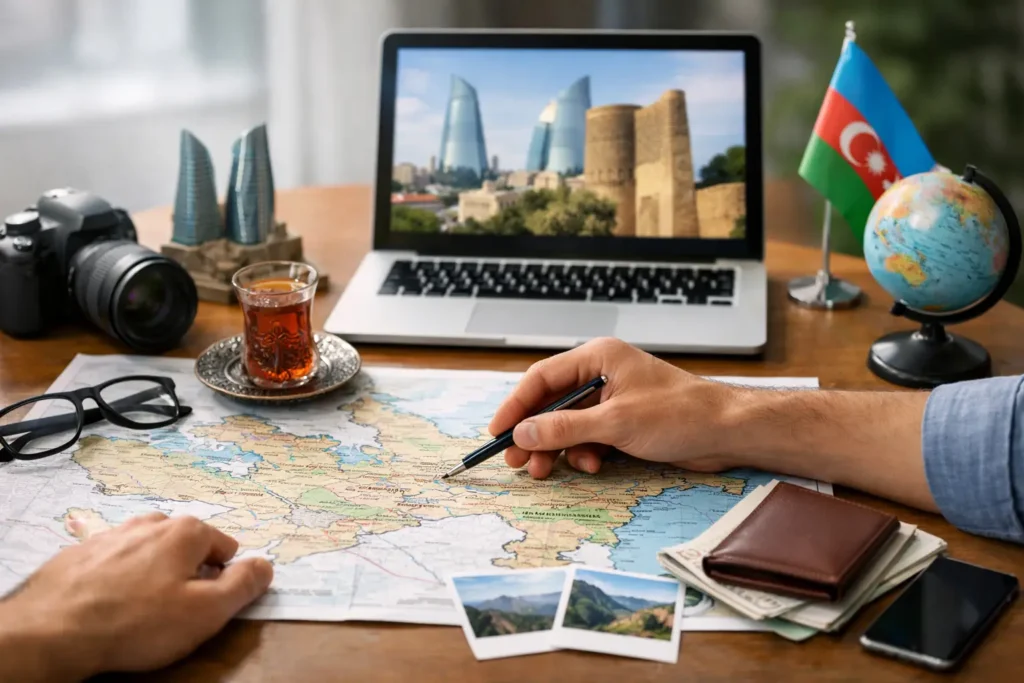
Azerbaijan can be sold as a compact short-break destination, a premium incentive setting, or a multi-night Caucasus circuit. The difference is not simply the hotel category or excursion count. Knowing how to build Azerbaijan itineraries means matching the route, pace, inclusions, and operational detail to the source market and trip purpose – then ensuring every moving part can be delivered consistently on the ground.
For international agencies and tour operators, a well-built program protects margin, reduces handling risk, and gives sales teams a clear product story. A weak program may look attractive on paper but lose value through unnecessary driving, poorly timed visits, or service components that do not fit the client profile.
Start with the commercial purpose of the program
Before selecting sights, define what the itinerary must achieve. A three-night FIT city break requires a different structure from a seven-night family circuit, a conference extension, or a high-energy incentive program. The right answer depends on arrival pattern, group size, hotel positioning, language needs, and the experience level expected by the end client.
For a first-time Azerbaijan product, Baku is generally the anchor. The capital combines modern architecture, heritage areas, waterfront activity, dining options, and a broad hotel base within a manageable operating radius. It also provides the strongest flexibility for late arrivals, early departures, and programs requiring different room categories or meeting facilities.
The first commercial decision is whether Baku is the destination or the gateway. If the objective is a short, high-conversion product, two or three nights based in Baku can work well with carefully selected Absheron Peninsula and Gobustan content. If the operator is building a longer holiday or incentive program, Baku should introduce the destination before the route moves into the mountains, countryside, or historic regional cities.
Build the route around realistic travel flow
Azerbaijan rewards thoughtful routing. Adding destinations because they are individually appealing can create a program that feels rushed. Instead, cluster experiences by geography and organize overnights where they reduce backtracking.
The Baku and Absheron foundation
A Baku city program can combine the Old City, cultural landmarks, contemporary architecture, and Caspian Boulevard according to available time and client interests. Absheron is a logical half-day or full-day extension, with cultural heritage sites such as Ateshgah and Yanar Dag. Gobustan, often paired with mud volcanoes, is another strong excursion option for travelers seeking archaeological and geological interest.
These components are especially useful for short-stay FITs, leisure groups, and pre- or post-event days. The operational advantage is clear: guests retain one hotel base, transfers remain simple, and the program can accommodate a range of arrival times.
The northwest circuit
For a four- to seven-night itinerary, the Baku-Shamakhi-Gabala corridor creates a natural transition from city to nature. Shamakhi and Ismayilli can be positioned as scenic route elements or overnight stops depending on pacing. Gabala provides access to mountain landscapes, resort hotels, Nohur Lake, and activities that can be adjusted for families, small groups, or incentives.
A common planning mistake is treating every regional attraction as a mandatory stop. Better itineraries allow time for the hotel experience, unplanned photography stops, lunch service, and a comfortable check-in. For premium or incentive groups, one well-executed signature experience often has more value than a day packed with short visits.
Mountain and heritage extensions
Shahdag and Tufandag work best when the program has a clear mountain-resort proposition. They can support active leisure, seasonal experiences, team-building concepts, and scenic overnights. The choice between them should reflect the selected route, hotel availability, and target experience rather than a desire to include both.
For longer cultural circuits, Sheki adds historic depth and a distinctly regional atmosphere, including the Khan’s Palace as a heritage highlight. Guba and the Khinalig route can be considered for travelers who want northern scenery and a more remote experience. Southern programs through Lankaran, or wellness-oriented extensions to Naftalan, should be developed as deliberate product variations rather than added to a standard first-time itinerary.
Design the itinerary by traveler type, not just duration
The same route should not be presented identically to every market. FIT clients often value flexibility, well-paced private touring, and a mix of guided highlights with free time. Series groups need consistent timing, coach access, restaurant capacity, and guide management. MICE travelers need a program that supports the business objective, whether that is recognition, relationship building, or team engagement.
For FIT programs, leave room for optional private experiences and hotel upgrades without making the base itinerary overly complex. A four-night Baku and Gabala product, for example, can offer an easy structure: airport arrival and city orientation, a Baku heritage day, a scenic transfer into Gabala with selected en-route visits, and a mountain or lake experience before departure.
For groups, avoid a schedule where every meal, visit, and transfer is fixed to the minute. A practical operating buffer protects the guest experience when a museum visit runs longer, a lunch service needs additional time, or a group moves at a different pace. This is not excess time. It is the operational space that helps a group program feel controlled.
For MICE and incentives, build the core agenda first: meeting sessions, gala requirements, branded moments, audiovisual needs, and departure windows. Excursions should reinforce the event concept. A Baku evening venue, a heritage-focused welcome activity, or a mountain team experience can be effective when transport, weather-appropriate timing, production needs, and guest flow are planned together.
Use seasonality to shape the experience
Seasonality should influence the program without turning the itinerary into a rigid calendar. City and heritage programs are reliable foundations across much of the year, while mountain resorts, lakeside experiences, and outdoor activities should be selected according to the desired atmosphere and available services.
In warmer months, regional nature circuits can support longer outdoor stops and relaxed resort stays. In cooler months, Baku’s cultural program, dining venues, museums, and conference infrastructure can take a larger role, while mountain stays can be designed around the appropriate seasonal resort experience. For each departure period, the DMC should confirm opening arrangements, driving schedules, and the most suitable timing for outdoor components.
It also helps to distinguish between a seasonal highlight and a program dependency. If a single activity is essential to the itinerary’s value, have an alternative experience ready. This is particularly relevant for incentives and fixed-date series where the client expects the published program to retain its quality.
Make every inclusion operationally defensible
An itinerary is a delivery document as much as a sales document. Each component should be checked against actual operating conditions: hotel room mix, coach or vehicle requirements, guide language, restaurant capacity, entrance arrangements, baggage handling, and realistic transfer times.
This matters most for multi-city groups. A regional circuit may require different vehicle allocation, guide rotation, or restaurant planning than a Baku-based program. Families may need connecting room options. Senior groups may benefit from fewer hotel changes and shorter walking segments. High-end FITs may require a more discreet transport and guide model. These details should be identified during quotation, not after confirmation.
A strong local DMC also helps agencies avoid using generic destination templates. The same headline route can be tailored around a client’s preferred hotel standard, meal plan, source-market expectations, and departure schedule. This allows an operator to maintain its own brand positioning while relying on local expertise for ground handling.
Create a clear sales story without overselling
The itinerary should be easy for a reservations or sales team to explain in a few sentences. Rather than listing every attraction, define the journey: Baku’s contemporary and heritage contrast, followed by the scenic northwest and mountain leisure; or a focused capital stay with archaeology, fire heritage, and Caspian settings.
Use day titles that reflect the experience, but keep descriptions accurate. If a day involves a long scenic transfer, say so in a positive, practical way and place meaningful stops along the route. If the program includes free time, explain its purpose: leisure at the resort, individual exploration, or time to enjoy hotel facilities. Transparent product design builds confidence for both the seller and the traveler.
Work with one accountable ground partner
The itinerary-building process is faster and safer when one local team coordinates hotels, transport, guides, restaurants, excursions, and contingency planning. It reduces the risk of suppliers working to different assumptions and gives the overseas operator a single point of contact from quotation through departure.
Brilliant Travel supports agencies, tour operators, and MICE planners with tailored Azerbaijan proposals, competitive B2B net rates, and full ground execution from arrival at GYD through regional touring and departure. The practical value is not just local knowledge. It is having an operations partner that can test the program before it reaches your sales team and manage it carefully once guests arrive.
The most successful Azerbaijan itineraries are not the ones that try to cover every corner of the country. They give each day a purpose, allow the destination to unfold at the right pace, and are backed by suppliers who can deliver exactly what has been sold.